On-Device AI Proposal Scorer
Built an on-device AI proposal-review tool that reduced estimated review effort from 126 hours to 8, with source-linked scores and protected documents kept local.
Too much material to review by hand
At Edison, I worked on a proposal-review problem involving 11 contractor responses, roughly a thousand pages each, and 40 scoring criteria. The documents included tables and scans, and the actual proposal files needed to stay on the device.
Building the pipeline
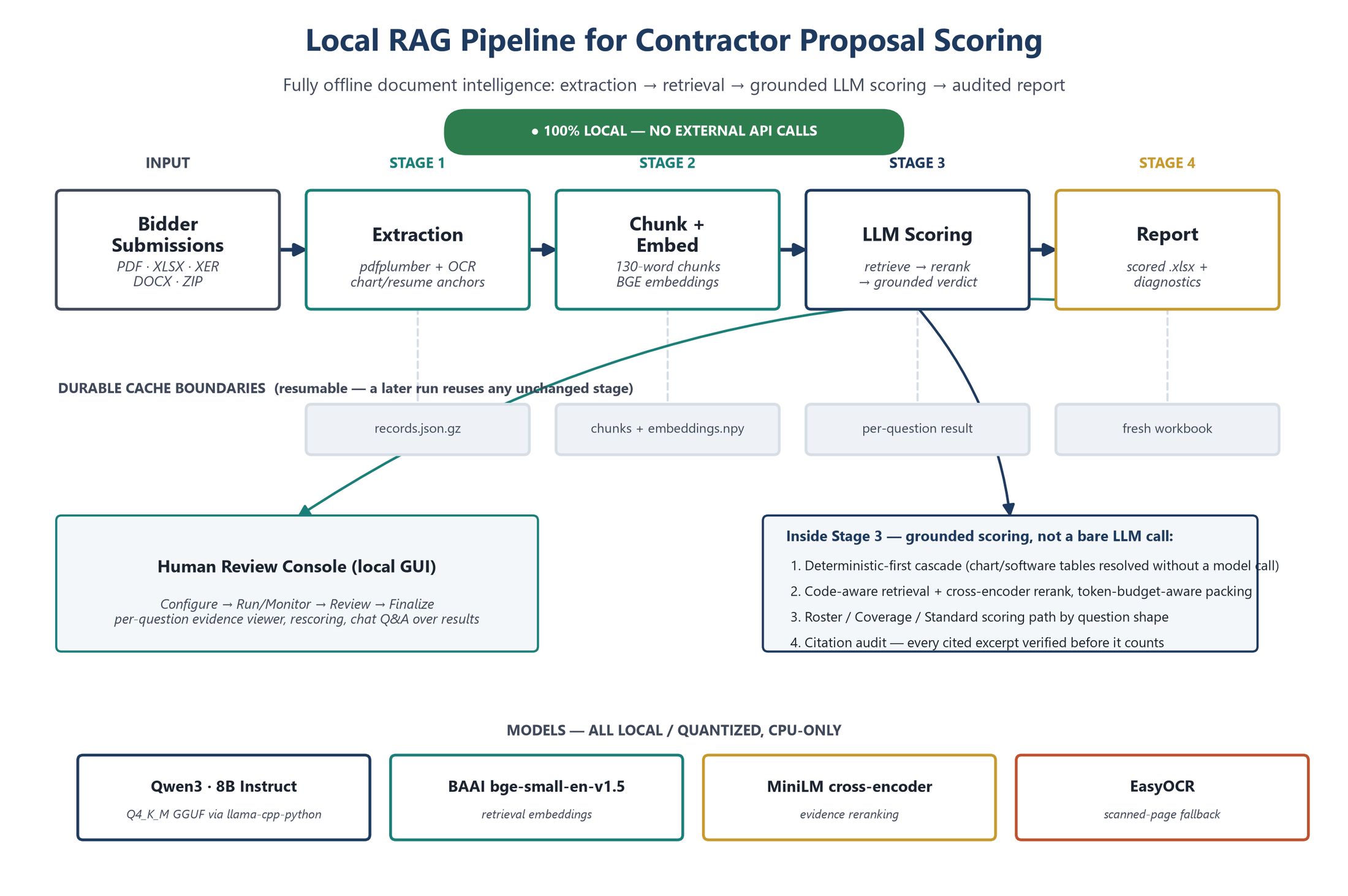
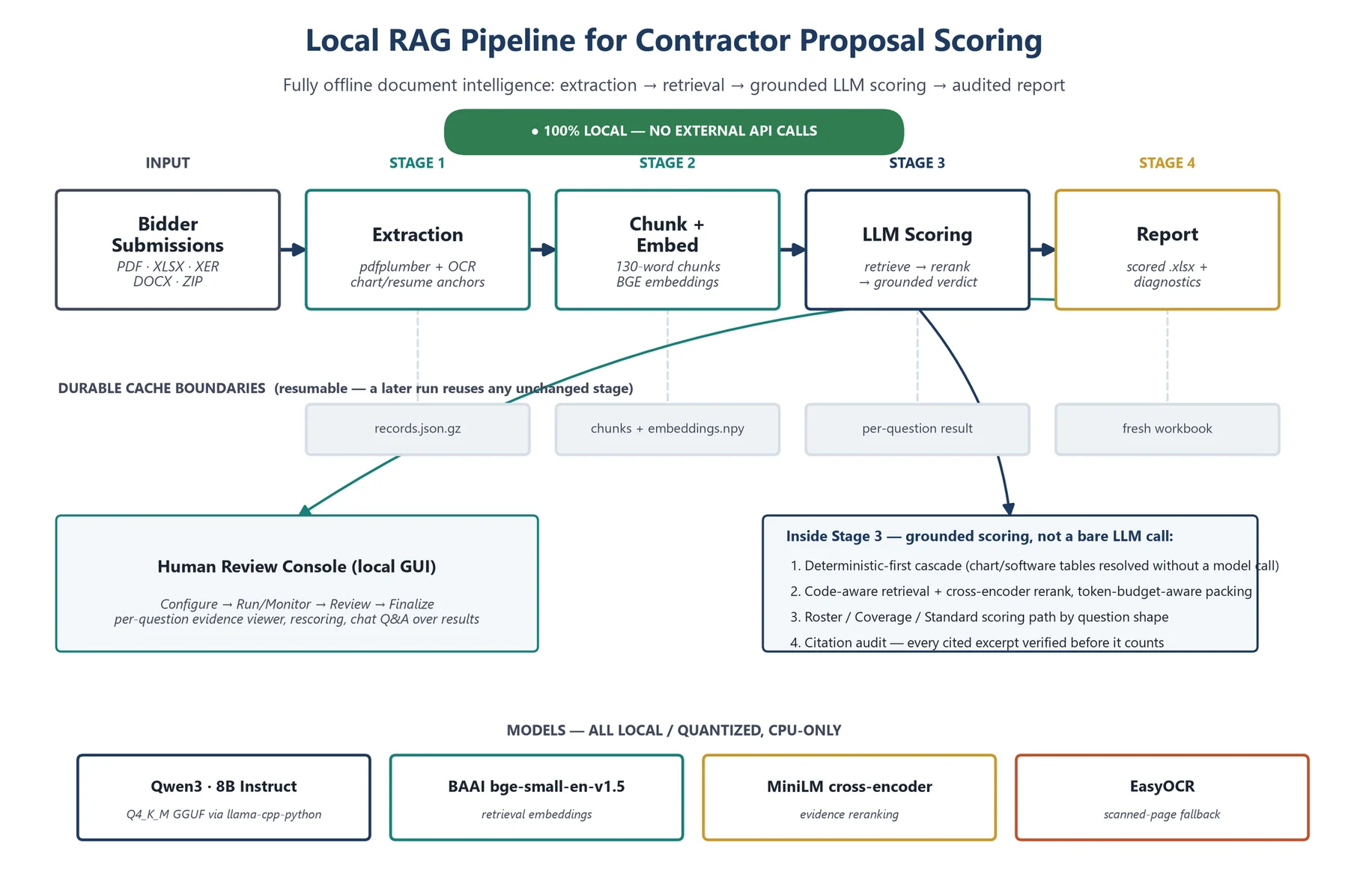
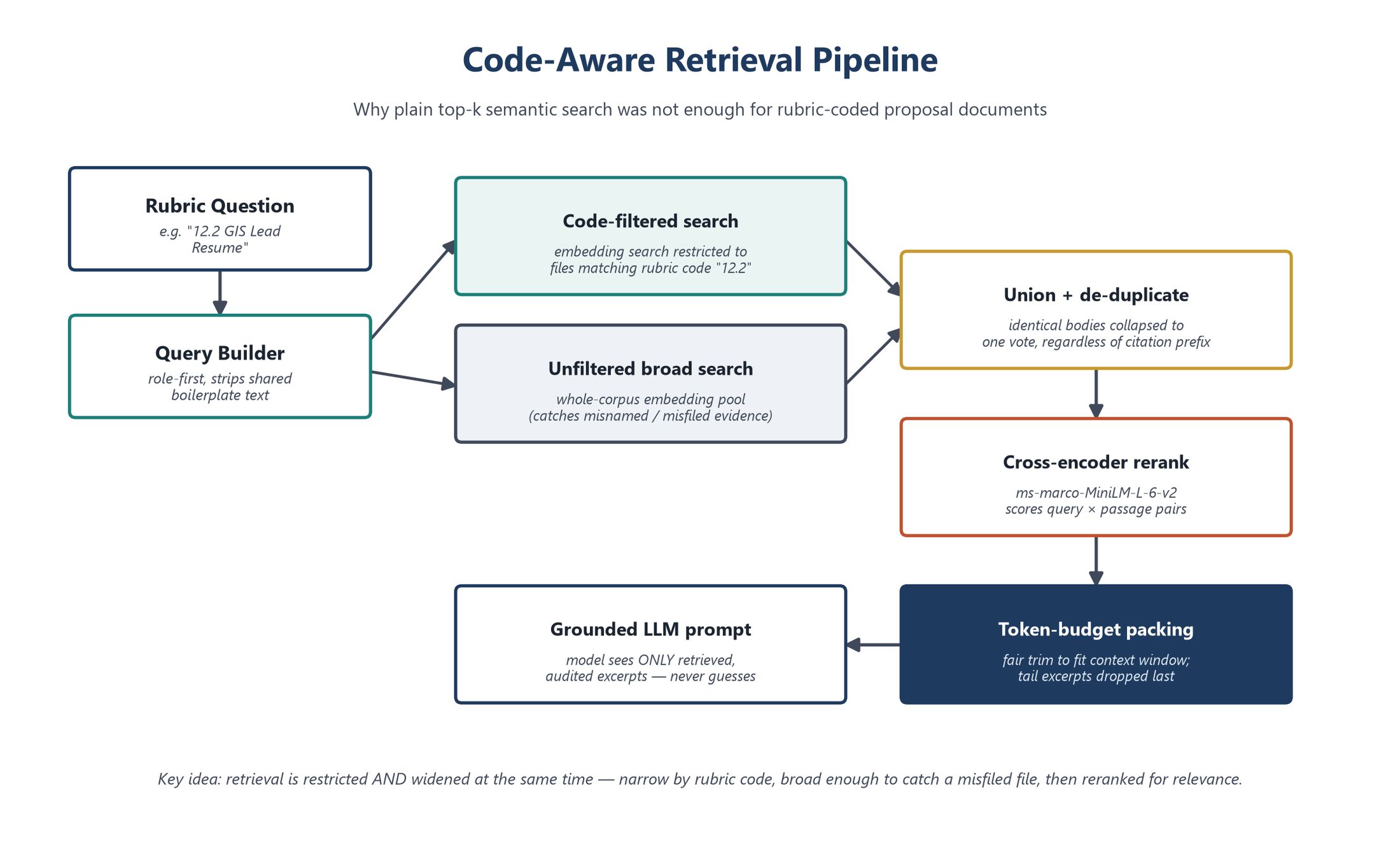
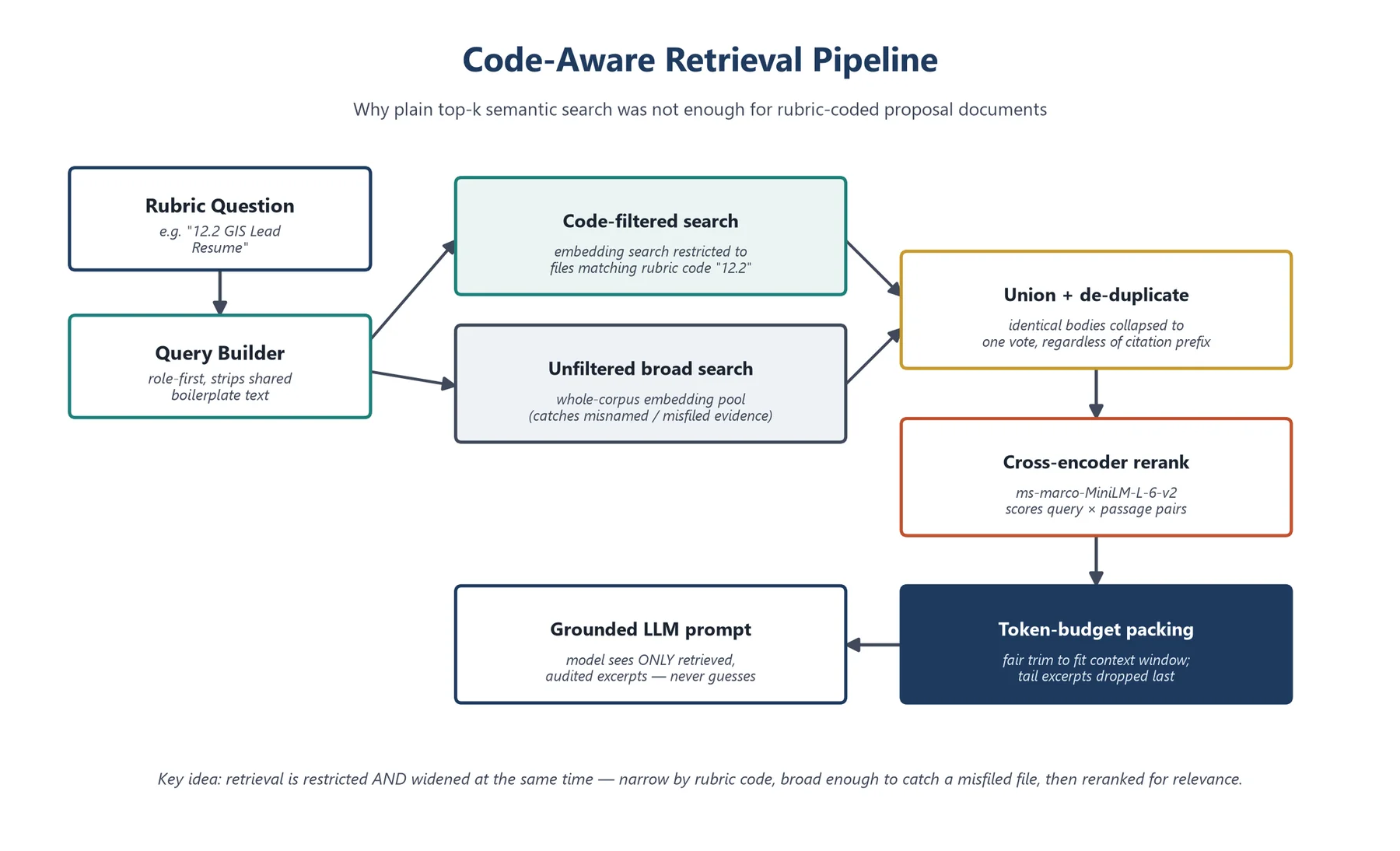
I built the workflow in Python and ran Qwen3-VL 8B locally through llama.cpp. I used OCR and table preprocessing to make the inputs usable, split the documents into chunks, and retrieved the passages relevant to each rubric question.
I separated ingestion, retrieval, evaluation, and export so I could see which stage caused a bad result. Reranking helped bring the most relevant passages forward before scoring.
Making the output easier to trust
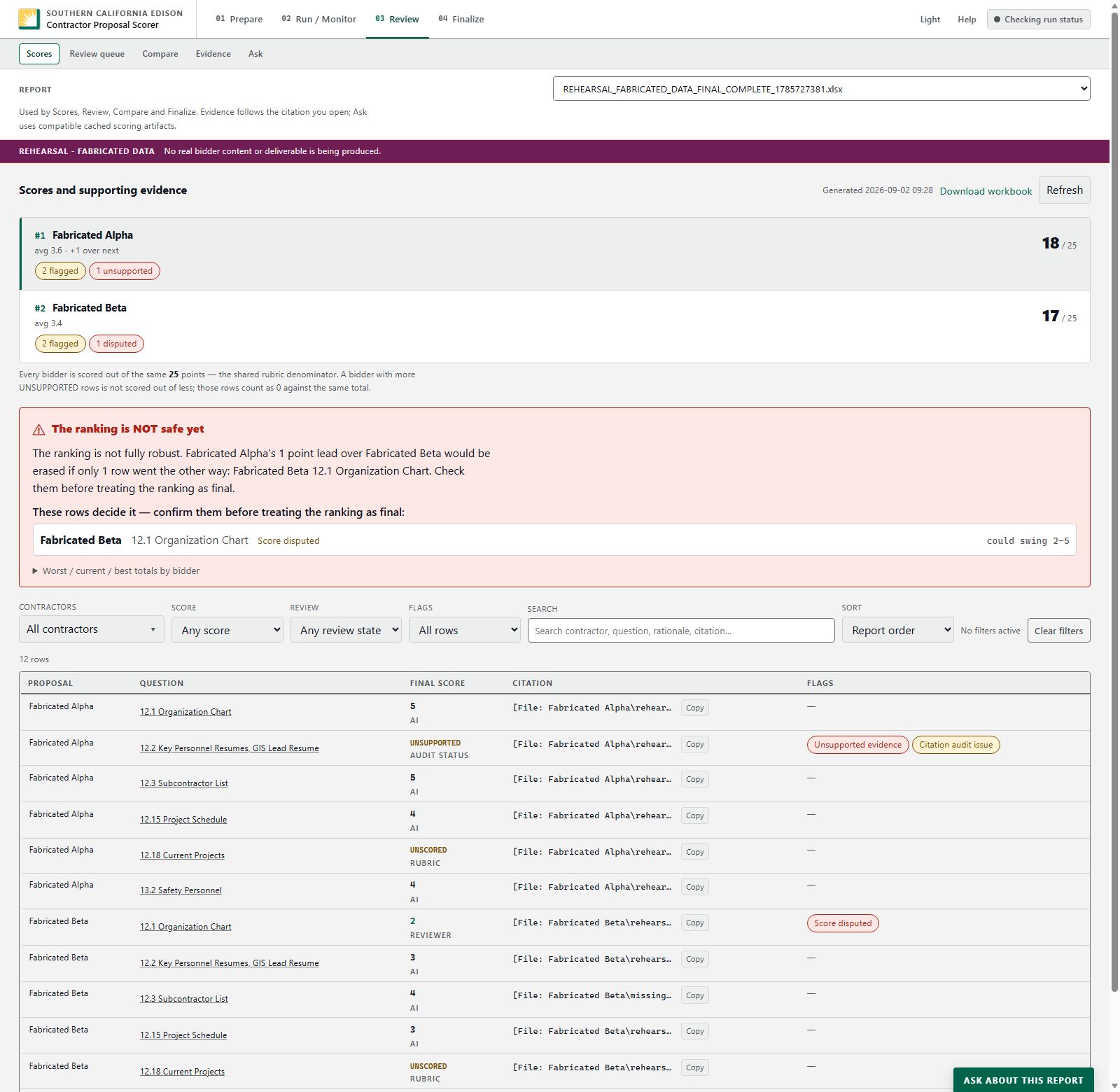
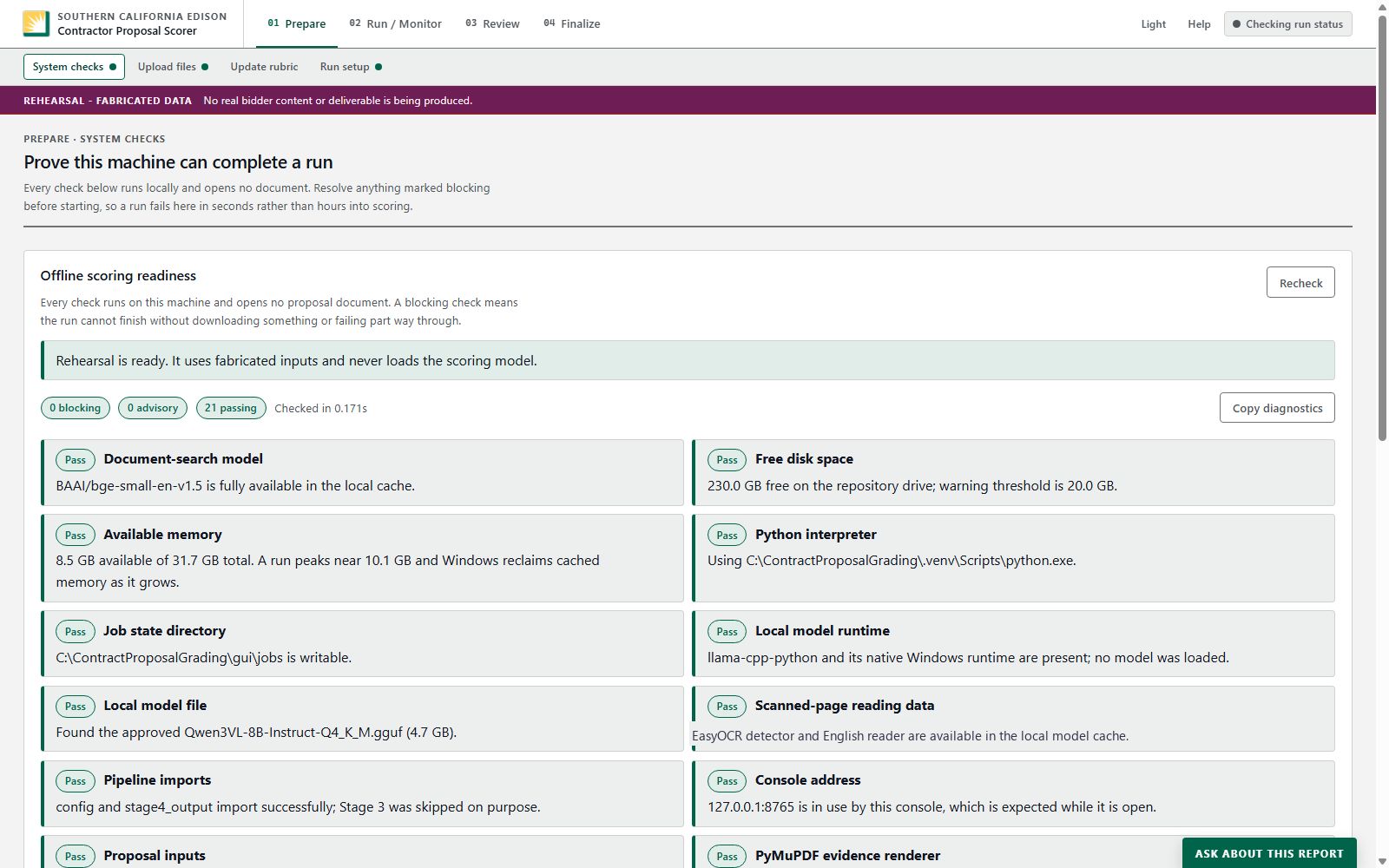
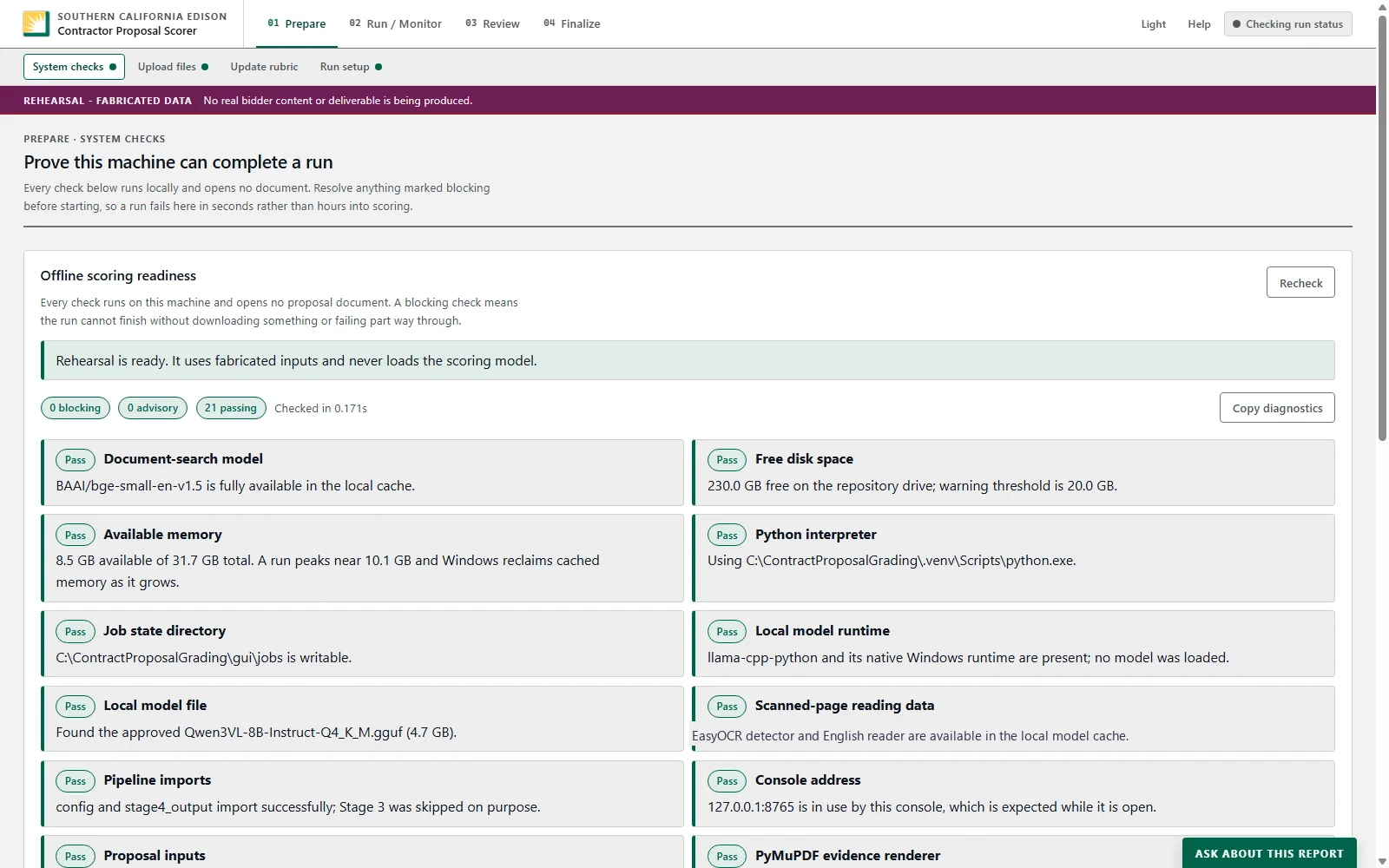
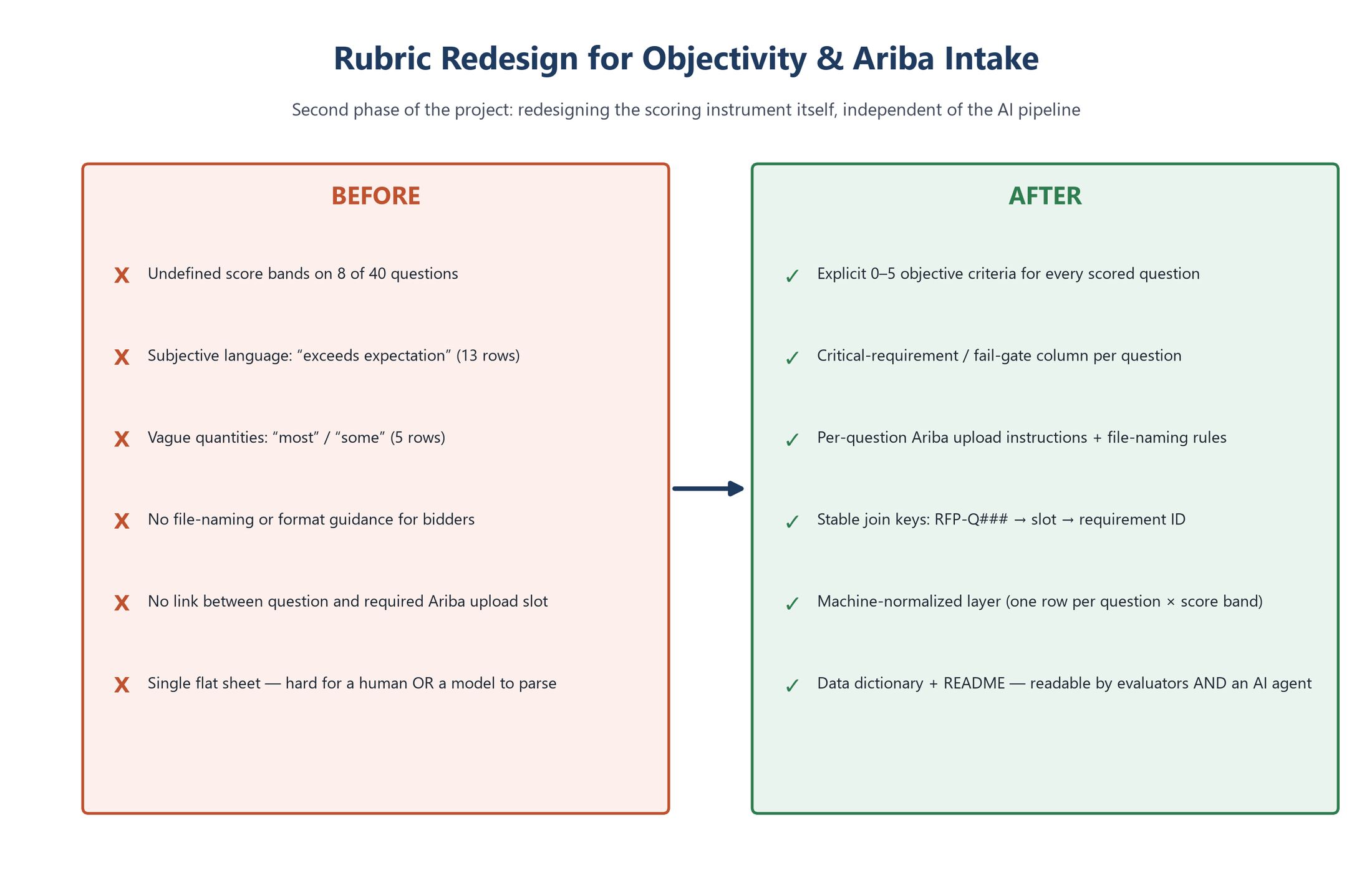
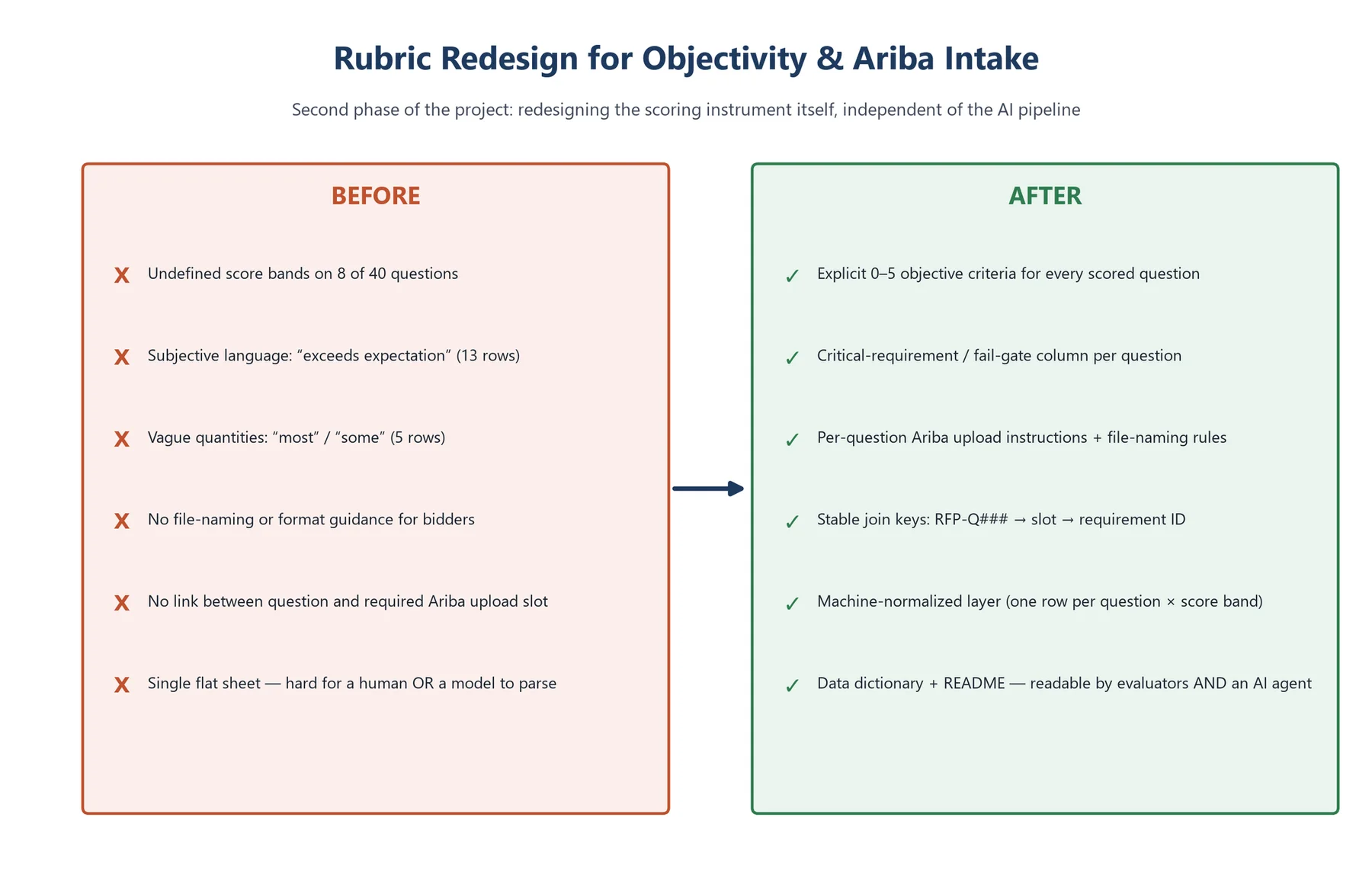
I redesigned the rubric into explicit questions and point logic. Preflight checks caught missing inputs, and each score linked back to the material behind it. The reviewer could inspect the evidence instead of accepting an answer without context.
The screenshots use demonstration data to show the workflow while keeping contractor documents private.
Result
Estimated review effort dropped from 126 hours to 8. In the project comparison, the system’s scores were within ±7% of the human review baseline.
A closer look
CAD, build photos, and technical details. Open any image for a closer look.
What I learned
Give the reviewer a way to check the answer. A score is much more useful when the supporting passage is one click away.
Project context
The time reduction is an estimate from this workflow. The interface screenshots use demonstration data so the actual contractor proposals stay private.
Mechanical engineering, robotics, software, and applied AI internships